AI for Business: How Companies Use AI to Scale and Grow
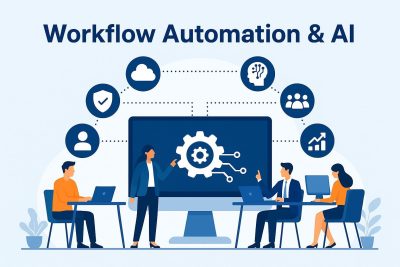
How can AI help large companies scale operations, automate complex processes, and optimize strategic decision-making in 2026? Executives, managers, and business leaders increasingly ask this question when exploring AI adoption across departments.
AI-driven systems automate cross-channel campaigns and prioritize leads based on predictive models. Research on AI adoption rates among enterprises in 2026 shows that organizations using predictive lead scoring close deals faster and improve sales efficiency across large teams.
In this guide, we explore enterprise-scale AI applications, large-scale automation strategies, practical frameworks for implementing AI, benchmarks from leading global companies, and actionable insights for maximizing ROI with enterprise AI in 2026.
| Field | Details |
|---|---|
| Topic | AI for Business |
| Last Updated | February 2026 |
| Difficulty Level | Intermediate–Advanced |
| Estimated Reading Time | ~15 minutes |
| Target Audience | Executives, managers, enterprise decision-makers |
How AI for Business Helps Enterprises Scale and Automate Operations
Key benefits of enterprise-level AI adoption:
- Automate end-to-end workflows across departments
- Optimize resource allocation and workforce management at division or company-wide levels
- Enhance strategic decision-making with predictive analytics
- Improve customer experiences across multiple channels
Integration with enterprise software systems:

- ERP (Enterprise Resource Planning): Manages core business processes such as finance, supply chain, and HR in one unified system.
- CRM (Customer Relationship Management): Tracks customer interactions to improve sales, marketing, and support.
- BI (Business Intelligence): Platforms analyzing large datasets to guide decision-making and strategic planning.
By integrating AI with ERP, CRM, and BI platforms, companies can orchestrate processes that connect finance, HR, supply chain, and customer support with the right enterprise AI tools.
Understanding enterprise AI adoption is essential for executives planning scalable, high-impact solutions that improve efficiency, revenue, and long-term strategy.
Boost Operations and Efficiency: Enterprise-Scale AI Applications
Large organizations often struggle with complex workflows, legacy systems, and cross-departmental bottlenecks. AI solutions enable automation at scale, predictive resource planning, and real-time decision-making.

End-to-End Workflow Automation
- Automate repetitive tasks across multiple departments, including finance, HR, supply chain, and customer support
- Connect workflows across divisions to automate multi-step processes, e.g., from lead generation to final order fulfillment
- Monitor and predict bottlenecks with AI analytics
Example: A global manufacturing company implemented AI-driven workflow orchestration linking production, logistics, and customer service, reducing delays by 25% and improving delivery accuracy.
AI orchestrates multi-step processes like lead-to-order fulfillment and resource optimization — learn more about enterprise automation workflows that companies use today.
Enterprise Resource Planning and Predictive Capacity
- Forecast workloads and resource needs across departments
- Optimize staffing, equipment allocation, and project timelines company-wide
Mini-case: A multinational consulting firm used AI to predict team availability and project timelines, improving delivery efficiency by 20%.
Key insight table:
| Metric | Improvement | Example |
|---|---|---|
| Staffing efficiency | +15% | AI predicts team availability, avoids overstaffing |
| Project delivery | +20% | AI adjusts project timelines dynamically |
| Resource allocation cost | -$2M | Predictive AI reduces waste and bottlenecks |
Enterprise-Scale Marketing and Sales Optimization
Marketing and sales in large organizations involve millions of customers, multi-channel campaigns, and complex personalization requirements. AI orchestrates processes from lead capture to final purchase across divisions and regions.
Customer Segmentation and Enterprise Personalization
- Analyze global customer data across markets
- Segment audiences for personalized campaigns at division, region, or product line level
- Predict trends and dynamically adjust strategies
Example: A multinational retailer used AI-powered segmentation across North America and Europe, improving targeted campaign conversion rates by 28%.
Automated Campaign Management and Predictive Lead Scoring
AI-driven systems automate cross-channel campaigns and prioritize leads based on predictive models. Research on AI adoption rates among enterprises in 2026 shows that organizations using predictive lead scoring close deals faster and improve sales efficiency across large teams.
Optimizing Customer Experience at Enterprise Scale
AI improves customer service across divisions, providing faster responses, predictive insights, and integration with enterprise systems.
AI Chatbots and Virtual Assistants
- Handle thousands of routine inquiries across multiple departments
- Integrate with CRM and service desk platforms for tracking, reporting, and analytics
Example: A large telecom operator resolved 70% of routine customer inquiries with AI chatbots, improving SLA compliance.
Ticket Prioritization and Workflow Management
- Automatically categorize and prioritize tickets based on urgency and business impact
- Reduce resolution times across multiple support teams
- Ensure consistent service quality company-wide
Personalized Customer Experience at Scale
- Use AI-driven CRM insights to predict customer needs and recommend actions
- Enable tailored interactions across regions, channels, and product lines
Example: A global e-commerce platform increased repeat purchases by 22% after implementing AI-driven personalization integrated with CRM and BI systems.
Use AI-driven CRM insights to predict customer needs and recommend actions — discover how AI analytics insights for enterprise support unlock deeper customer intelligence.
Large-Scale Automation: From Customer Interaction to Purchase
Enterprise AI now enables multi-step, cross-departmental automations connecting all stages of the customer journey. By linking marketing, sales, operations, and customer support, AI orchestrates workflows from initial inquiry to post-purchase follow-up.
Workflow Example:
- Initial inquiry: Automatically routed to the right department
- Personalized recommendations: AI-driven follow-ups and nurturing campaigns
- Order processing: Inventory, billing, and logistics automation
- Post-purchase support: AI-powered service desk and feedback collection
Real Case: A multinational electronics company implemented AI workflows connecting marketing, sales, and supply chain, reducing order fulfillment time by 30% and increasing customer satisfaction scores.
Risks and Considerations for Enterprise AI
- Dependence on high-quality data across departments
- Risk of over-automation in critical processes
- Complexity of integrating AI with legacy systems
- Need for executive oversight and KPI tracking
Example: ROI delays occurred at a multinational company when AI was deployed without proper integration between departments.
Planning and Implementing Enterprise AI Strategy
Implementing AI at an enterprise scale requires structured planning and clear strategic steps. Companies must identify high-impact processes, define measurable KPIs, and ensure cross-department alignment to avoid fragmented adoption.
Strategic Steps:
- Identify high-impact processes: Target divisions and workflows where AI will deliver maximum ROI
- Define measurable KPIs: Establish success metrics before implementation to track impact
- Pilot critical departments: Test AI solutions in key areas before scaling enterprise-wide
Key Success Factors:
- Train teams in enterprise AI tools for multi-department workflows
- Monitor performance continuously across all divisions
- Combine AI insights with human oversight for critical decisions
Equally important are success factors such as team training, continuous performance monitoring, and combining AI insights with human judgment. Industry research on enterprise AI adoption and ROI statistics for 2025 confirms that organizations following structured rollout strategies achieve higher returns and faster impact.
AI Trends and Outlook for Enterprises (2027–2028)
Enterprise AI adoption continues to accelerate. According to enterprise AI adoption trends and sector impact, leading organizations are expanding AI use in predictive analytics, decision-support systems, and cross-platform automation.
Key Trends & Expected Outcomes:
- Predictive analytics: Accelerates strategic decision-making and operational efficiency
- Low-code/no-code platforms: Enable rapid deployment in complex organizations
- Integrated enterprise workflows: ERP, CRM, and BI systems work together for consistent data and automated processes
- Efficiency gains: Early adopters report 20–35% improvement and better cross-department coordination
Measuring ROI and Strategic Impact
Track KPIs at the enterprise level: efficiency, cost reductions, revenue growth, and customer satisfaction.
| Area | Metric | Improvement Example |
|---|---|---|
| Operations | Efficiency gains | 25% |
| Marketing | Conversion rate | +28% |
| Customer Support | SLA compliance | +30% |
Frequently Asked Questions About Enterprise AI
How can enterprises implement AI at scale without disruption?
Enterprises should start with high-impact processes where AI delivers the most value. Integrate AI solutions with existing systems, ensure cross-department alignment, and scale gradually. Piloting in critical departments before enterprise-wide rollout helps minimize disruptions and maximizes ROI.
What common mistakes should enterprises avoid when adopting AI?
Avoid fragmented implementations, skipping integration with legacy systems, and neglecting change management. Over-automation in critical processes without human oversight can create operational risks. Successful adoption requires strategic planning, team training, and continuous monitoring.
Which AI tools are best for enterprise adoption?
Enterprise-grade platforms like Salesforce Einstein, HubSpot AI, and Marketo Engage are widely used for end-to-end automation, predictive analytics, and multi-department workflow orchestration. Selecting tools aligned with your specific business processes ensures maximum impact.
How can ROI be measured across divisions?
Track key performance indicators such as efficiency gains, cost reductions, revenue impact, customer satisfaction, and SLA compliance. Measuring these metrics across departments allows enterprises to justify AI investments and adjust strategies for optimal outcomes.
What strategies ensure sustainable, long-term AI adoption in large organizations?
Combine AI insights with human oversight for critical decisions, continuously train teams on tools and workflows, and integrate predictive analytics with enterprise planning systems. Regularly review KPIs and adapt strategies to evolving business needs to maintain long-term value.
Conclusion
AI enables large organizations to scale efficiently, optimize operations, and automate end-to-end workflows. Strategic adoption, enterprise-grade tools, and cross-department integration allow companies to increase efficiency, revenue, and competitive advantage at scale.
Start implementing enterprise AI solutions today to optimize workflows, drive growth, and future-proof your organization.
Related Articles
- Best AI SaaS Tools for Businesses
- AI Implementation Strategy for Companies
- AI Analytics for Business Decision Making