The Real Cost of Implementing Emerging Technologies in Enterprise
Most companies don’t fail because the technology doesn’t work.
They fail because they underestimate the cost of implementing emerging technologies.
And by the time they realize it, the budget is already gone.
Many organizations invest heavily in emerging technologies expecting rapid transformation. Artificial intelligence, IoT systems, blockchain platforms, and advanced data infrastructure promise improved efficiency, automation, and new revenue streams.
However, the cost of implementing emerging technologies in large enterprises is often far higher than expected. While initial software or hardware purchases may seem manageable, enterprises frequently underestimate expenses related to integration, data infrastructure, organizational change, and long-term maintenance.
In reality, the most significant investments happen after the technology is purchased. Integration with legacy systems, employee training, data preparation, and cybersecurity often represent the majority of the budget.
For many organizations, understanding the cost of implementing emerging technologies becomes a critical step before launching large-scale digital transformation initiatives.
The scale of these investments is unprecedented. As highlighted in the Gartner forecast on global IT spending, the market is on a trajectory to reach $6.15 trillion by 2026, a figure that reflects a massive capital shift toward digital infrastructure that many firms are still struggling to manage efficiently.
However, this number reflects total market expansion — not efficiency.
A significant portion of that spend is still lost in projects that never deliver meaningful ROI.
What Is the True Cost of Implementing Emerging Technologies?
The true cost of implementing emerging technologies includes far more than purchasing software or hardware. Enterprise technology adoption typically involves infrastructure upgrades, integration work, data preparation, workforce training, and long-term operational expenses.

For many enterprises, accurately estimating the cost of implementing emerging technologies is essential before launching large-scale technology modernization initiatives.
In many cases, the technology itself represents only a small portion of the total investment.
And this is where most planning breaks.
Because companies budget for tools.
But they don’t budget for everything around the tools.
Why Companies Often Underestimate Technology Implementation Costs
Many organizations assume that implementing a new technology simply means purchasing the right tools. In reality, enterprise technology adoption is a complex operational transformation that affects infrastructure, processes, and workforce capabilities.
Several factors explain why costs are frequently underestimated:
Legacy system integration
Most enterprises operate on complex legacy IT environments. Integrating modern platforms with older systems often requires significant custom development — and this is rarely scoped correctly at the start.
Data preparation challenges
Technologies such as AI and machine learning require high-quality data. In practice, most enterprise data is incomplete, inconsistent, or unusable.
Fixing this is not a side task — it often becomes the project.
Organizational change management
Employees must learn new tools, workflows, and processes. Adoption is slow, resistance is real, and productivity usually drops before it improves.
Security and compliance requirements
New technologies introduce additional cybersecurity risks and regulatory obligations that weren’t part of the initial budget.
Because of these factors, many companies don’t just exceed budgets.
They lose control of them.
Where Things Actually Break in Real Projects
On paper, most implementations look clean. In practice, they rarely are.
A common pattern:
the model works,
the demo impresses leadership,
but integration slows everything down.
In one enterprise project, the AI system delivered accurate predictions, but the internal tools were so slow that teams stopped using it after two weeks and went back to spreadsheets.
This is where the cost of implementing emerging technologies quietly explodes:
not in the technology itself,
but in the friction between systems, teams, and workflows.
Average Enterprise Investment in Emerging Technologies
The cost of implementing emerging technologies varies depending on company size, infrastructure maturity, and the scale of deployment. However, enterprise projects typically require substantial investments.
Important:
The ranges below are not fixed prices. They reflect real market patterns observed across different types of companies, from mid-sized firms to large enterprises. Actual costs can vary significantly depending on scope, geography, and internal capabilities.
Typical Enterprise Technology Investment Ranges
| Technology | Typical Enterprise Cost | Key Cost Drivers |
|---|---|---|
| Agentic AI systems | $1.5M – $7M | talent, compute infrastructure |
| Industrial IoT | $300k – $1.5M | sensors, network upgrades |
| Custom generative AI | $5M – $20M | data preparation, GPUs |
| Data integration platforms | $500k – $3M | infrastructure and pipelines |
These numbers tend to be realistic for large enterprises.
But context matters:
- A startup can deploy AI workflows for under $100k using existing APIs
- A large bank can spend $10M+ integrating the same capability into legacy systems
The difference is not the technology.
It’s everything around it.
Large enterprises often deploy multiple technologies simultaneously as part of broader digital transformation strategies, which significantly increases total investment.
The 10 / 20 / 70 Technology Implementation Cost Model
To avoid these pitfalls, top-tier consulting firms lean on the 10 / 20 / 70 implementation model. This framework, popularized by Boston Consulting Group, serves as a stark warning: while software is the visible cost, 70% of your budget will inevitably be consumed by organizational change and business process integration.
It’s not a strict formula.
It’s a warning.
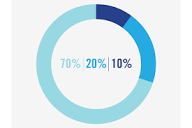
Enterprise Technology Cost Distribution
| Cost Category | Share of Budget |
|---|---|
| Algorithms and software | 10% |
| Data and infrastructure | 20% |
| Organizational change | 70% |
Originally popularized by Boston Consulting Group, this model highlights a consistent pattern across real-world projects:
Software is the cheapest part.
Change is the expensive part.
A simple rule used by experienced teams:
If you are not allocating at least 60% of your budget to data, integration, and change management,
you are underestimating the cost of implementing emerging technologies.
Hidden Costs That Increase Technology Implementation Budgets
Many of the most expensive aspects of emerging technology adoption are not visible during the planning phase.
And this is where budgets usually break.
Major Hidden Costs in Enterprise Technology Projects
| Hidden Cost | Typical Impact | Why It Happens |
|---|---|---|
| Data cleaning | up to 3× budget increases | poor data quality |
| Model retraining | $25k – $100k annually | AI models degrade over time |
| Energy consumption | 5–10% of IT budget | cloud compute usage |
| Security upgrades | significant additional cost | new attack surfaces |
These are not theoretical numbers.
For example, IBM has reported that poor data quality can cost organizations over $5 million annually.
That figure is based on aggregated enterprise studies — not every company hits that number, but the pattern is consistent: bad data is expensive.
Similarly, retraining AI models is often ignored in early budgets, even though it becomes a recurring operational cost.
Additional Enterprise Cost Drivers in 2026
Emerging technologies continue evolving rapidly, and several cost factors are becoming more visible in real deployments.

AI Talent Premium
The demand for AI engineers and MLOps specialists remains high.
In the U.S., senior roles can exceed $200k annually.
In Europe, experienced profiles typically range between €85k and €150k depending on the market.
These are not edge cases — they are becoming standard for high-impact roles.
Shadow AI Risks
Employees increasingly use external AI tools without formal approval.
This creates hidden costs:
- data leaks
- compliance risks
- duplicated tools
In some companies, this becomes a parallel, unmanaged tech stack.
Network Infrastructure Upgrades
Large-scale IoT deployments require reliable connectivity.
In many cases, companies discover too late that their infrastructure cannot support the scale they planned.
Fixing that is expensive.
A Reality Most Companies Ignore
Most enterprises are not ready for large-scale emerging technology adoption.
Not because of budget.
But because their systems are not prepared.
In many cases, these projects are approved to justify innovation budgets rather than solve real problems.
If the use case is not clearly tied to revenue or cost reduction, the investment usually doesn’t pay off.
Why Many Technology Projects Fail to Deliver Expected ROI
Despite massive investments, results vary widely.
Despite massive investments, the results are sobering. Research conducted by MIT Sloan and Boston Consulting Group reveals that only 10% to 20% of companies achieve significant financial benefits from AI, a gap that stems from underestimating the organizational learning and operational complexity required for tech adoption.
That means most are still in the implementation phase — spending more than they generate.
ROI Differences Between Technology Leaders and Laggards
| Company Category | Average ROI |
|---|---|
| High-performing adopters | ~$10 per $1 invested |
| Average companies | ~$3–4 per $1 invested |
| Laggards | neutral or negative ROI |
These figures should not be taken as guarantees.
They reflect observed trends across studies, not fixed outcomes.
In practice, ROI depends less on the model…
and more on execution.
Companies that fail usually:
overbuild,
overspend,
and underestimate the cost of implementing emerging technologies across the organization.
Real Enterprise Examples of Technology Implementation Costs
Manufacturing IoT Deployment
A manufacturing firm implementing IoT sensors across production lines may invest between $500,000 and $1.5 million.
This is a realistic range based on current industrial deployments, but actual costs depend heavily on scale and infrastructure maturity.
Costs often include:
- industrial sensors
- edge computing devices
- network upgrades
- predictive maintenance systems

AI-Driven Retail Analytics
A retail company deploying AI for demand forecasting can easily spend several million dollars.
Not because the model is expensive,
but because integrating data from ERP, CRM, and logistics systems is.
Strategies to Reduce Technology Implementation Costs
Although emerging technologies require significant investment, companies can reduce the cost of implementing emerging technologies with the right approach.
- Start with pilot projects
Scaling too early is one of the most expensive mistakes. - Prioritize data infrastructure
If your data is not ready, nothing else will work. - Use existing platforms before building
Custom solutions are expensive — and often unnecessary. - Focus on measurable outcomes
If you can’t tie it to revenue or cost reduction, don’t build it.
The Long-Term Value of Emerging Technologies
Despite the cost, these technologies can create real value.
But only when implemented with discipline.
Companies that succeed don’t adopt more technology.
They adopt it better.
FAQ
What is the cost of implementing emerging technologies in a company?
It can range from tens of thousands to tens of millions depending on scale. The biggest factor is not the technology, but integration and organizational complexity.
Why do projects exceed budgets?
Because companies underestimate integration, data preparation, and internal change.
Which technology is most expensive?
Custom AI systems tend to be the most expensive — mainly due to data and infrastructure, not the models themselves.
How long to see ROI?
Anywhere from months to several years. Most companies take longer than expected.
Conclusion
Most companies don’t lose money on technology because the tools fail.
They lose money because they underestimate the cost of implementing emerging technologies at scale.
The companies that win are not the ones adopting the most technology,
but the ones that understand the real cost before they invest.