How Small Businesses Can Use AI to Improve Efficiency and Drive Growth
Introduction
AI for small businesses is no longer reserved for tech giants or Fortune 500 companies. Today, small businesses can use AI to save time, reduce operating costs, and compete more effectively—without massive budgets or technical teams.
The real challenge isn’t whether AI works. It’s understanding how to apply it in practical, realistic ways that actually improve efficiency and drive measurable growth.
In this guide, you’ll learn how small businesses are using AI today, where it delivers the highest return, and how to get started without overcomplicating your operations.
What Does Using AI in a Small Business Really Mean?
Using AI in a small business means applying software that automates repetitive tasks, analyzes data, and improves customer interactions—without requiring technical teams or replacing employees. Most small businesses adopt AI through easy-to-use tools that integrate directly into existing workflows.
For a deeper breakdown of practical AI use cases and benefits for small businesses, real-world examples show how AI tools are applied without technical teams or complex infrastructure.
Key points:
- Automates tasks
- Improves decision-making
- Enhances customer interactions
- Provides actionable insights without technical expertise
| Topic | Details |
|---|---|
| Focus | AI for small businesses |
| Last Updated | 2026 |
| Difficulty | Beginner–Intermediate |
| Reading Time | ~8 minutes |
| Best For | Small business owners & managers |
Why AI Matters for Small Businesses Today
AI adoption has accelerated because modern tools are no longer expensive or complex. They are built specifically for small teams that need to do more with limited resources.
Recent data on how small businesses are adopting AI shows that most SMBs are using AI primarily to improve efficiency, customer experience, and decision-making across core operations.
For small businesses, AI is not about experimentation—it’s about operational efficiency and scalability. When margins are tight, even small productivity gains can have a significant financial impact.
AI allows small businesses to:
- Reduce manual, low-value work
- Respond faster to customers
- Make data-driven decisions instead of relying on guesswork
Small improvements in efficiency can directly translate into higher profits.
Track one KPI at a time to see measurable impact from AI adoption.
Once you understand where AI creates the most value, the next step is applying it in a way that improves efficiency without disrupting daily operations.
Key Areas Where Small Businesses Can Apply AI
Marketing and Customer Acquisition
AI helps small businesses improve marketing performance without hiring large teams. It can support content creation, optimize advertising campaigns, and identify high-intent leads.
Instead of spreading budgets thin, AI-driven insights allow businesses to focus on strategies that consistently convert.
Mini-benefits:
- Increase lead conversion rates by up to 20%
- Reduce time spent on ad optimization by 50%

👉 Learn more in our guide on AI marketing tools for SMBs.
Customer Support and Service
AI-powered chatbots and customer support tools handle repetitive questions, provide instant responses, and escalate complex issues to human agents.
This improves customer satisfaction while lowering support costs—especially for businesses that can’t staff 24/7 teams.
According to chatbot impact statistics for small businesses, AI-powered chatbots significantly reduce response times and support costs while maintaining customer satisfaction.
AI ensures faster responses without expanding your team.
A small e-commerce shop reduced response time by 60% using a chatbot integrated with their CRM.
Productivity and Internal Operations
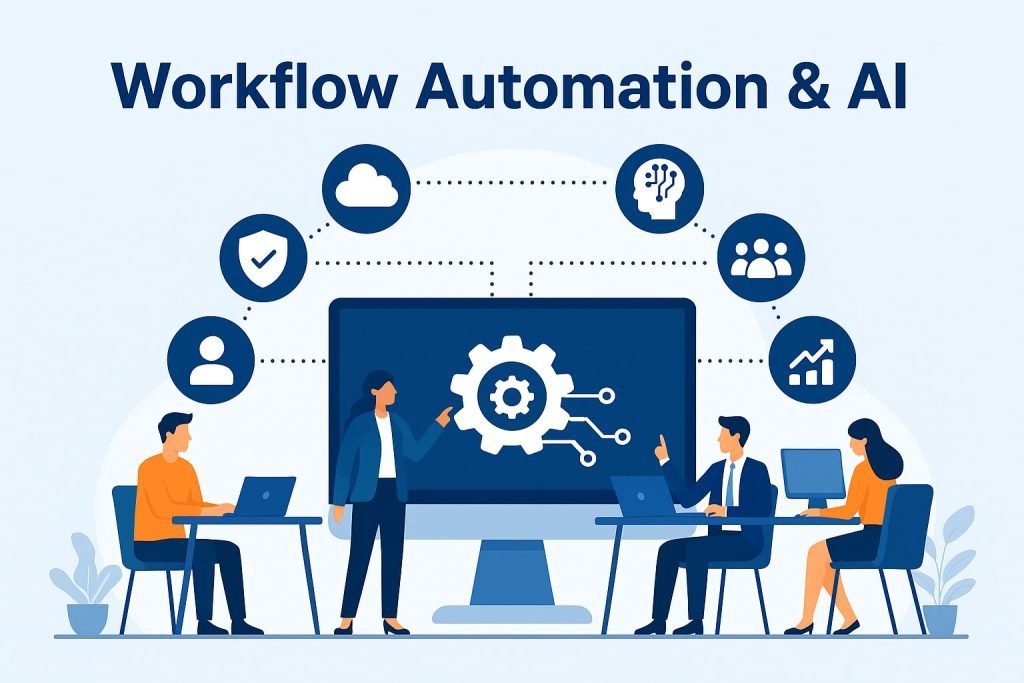
AI is especially effective at automating internal workflows such as scheduling, document processing, email management, and task prioritization.
For small teams, these efficiencies add up quickly.
Guides on AI automation for small business operations show how small teams can streamline workflows, reduce errors, and improve productivity without adding headcount.
- Automate repetitive administrative tasks
- Free up time for higher-value work
- Reduce errors and streamline workflows
Productivity Tools Comparison Table
| Task | Recommended AI Tool | Key Benefit | Cost Range |
|---|---|---|---|
| Email Management | SuperAI Mail | Automates inbox sorting & responses | $15–$50/mo |
| Scheduling | AI Scheduler Pro | Smart appointment booking | $10–$30/mo |
| Document Processing | DocuSmart AI | Auto-classifies & summarizes | $20–$60/mo |
| Task Prioritization | FocusAI Planner | Optimizes task order & reminders | $12–$40/mo |
These examples show how AI fits naturally into everyday workflows—not as a replacement for people, but as a force multiplier for small teams.
Data Analysis and Business Decisions
AI tools can analyze sales trends, customer behavior, and operational data to surface insights that would otherwise go unnoticed.
You don’t need a data department—modern AI platforms translate complex data into clear, actionable recommendations.
Data-driven decisions improve performance without adding headcount.
A Simple Framework for AI Adoption in Small Businesses
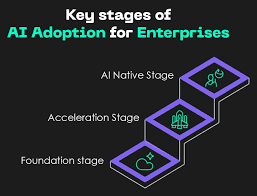
To avoid complexity and wasted investment, many successful small businesses follow a three-stage AI adoption approach:
- Assist: Use AI to support everyday tasks like writing, scheduling, or customer replies
- Automate: Apply AI to repetitive processes that consume time and resources
- Optimize: Use AI insights to improve decisions, forecasting, and performance
A marketing agency implemented stage 1 AI tools and cut campaign preparation time by 40%.
Start small, measure results, and expand gradually to maximize ROI.
The Main Benefits of AI for Small Businesses
When applied strategically, AI delivers clear business benefits:
- Improved efficiency: Less time spent on repetitive work
- Lower operating costs: Automation reduces manual effort
- Better customer experience: Faster responses and personalization
- Scalable growth: Expansion without proportional hiring
For small teams, saving even 20–30 minutes per employee per day can compound into hundreds of productive hours recovered over the course of a year.
Typical Business Impact of AI for Small Businesses
| Area | Typical Improvement |
|---|---|
| Administrative tasks | 20–40% time saved |
| Customer response time | 30–60% faster |
| Marketing efficiency | Higher ROI with lower ad spend |
| Operational costs | Reduced manual workload |
Source: industry statistics on AI productivity and efficiency gains for small businesses.
Focus on measurable business outcomes, not technology for its own sake.
Document improvements weekly to quantify ROI.
AI ROI by Business Function: Where Small Businesses See Results Fastest
Not all AI use cases deliver value at the same speed. For small businesses with limited resources, focusing on areas with faster ROI is critical.
The table below shows where AI typically delivers measurable impact first across common small business functions.
| Business Function | Time to First Results | Typical ROI Impact |
|---|---|---|
| Administrative tasks | 1–2 weeks | High |
| Customer support | 2–4 weeks | High |
| Marketing operations | 3–6 weeks | Medium–High |
| Sales insights & forecasting | 1–2 months | Medium |
| Advanced data analysis | 2–3 months | Medium |
For most small teams, AI delivers the fastest returns when applied to repetitive, operational tasks that consume daily time rather than long-term strategic analysis.
Common Mistakes Small Businesses Make When Adopting AI
Most AI initiatives fail not because of the technology itself, but because of unrealistic expectations and poor execution. Small businesses often rush adoption without a clear plan or measurable objectives.
The most common mistakes include:
- Trying to automate everything at once
AI works best when applied incrementally. Attempting to automate multiple processes simultaneously often leads to confusion, low adoption, and unclear results. - Choosing tools without a clear business objective
Many businesses adopt AI because it sounds promising, not because it solves a specific problem. Every AI tool should be tied to a measurable outcome, such as time saved or costs reduced. - Expecting instant results
While AI can deliver fast improvements, meaningful impact usually comes after optimization and adjustment over time. Early testing and iteration are critical. - Ignoring team adoption and training
Even simple AI tools require basic onboarding. Without team buy-in, productivity gains are often lost.
AI delivers the best results when implemented gradually, with clear goals and realistic expectations.
Track one KPI per AI-driven process to avoid overwhelm and maintain focus.
Once you understand where AI creates the most value, the next step is applying it in a way that improves efficiency without disrupting daily operations.
How to Get Started with AI in Your Small Business
Getting started with AI doesn’t require a full transformation or major investment. The most effective approach is to begin with a single, clearly defined use case.
A practical starting framework looks like this:
- Identify one process that consumes excessive time
Focus on repetitive, low-value tasks such as customer inquiries, scheduling, or reporting. - Define a clear success metric
Examples include hours saved per week, reduction in response time, or lower operational costs. - Test one AI-powered solution
Start with tools that integrate into your existing workflow and require minimal setup. - Measure results before expanding
Evaluate performance after a few weeks and refine usage before scaling to other areas.
Small, measurable steps reduce risk and build confidence in AI adoption.
Early wins help gain internal support and make future AI investments easier to justify.
What to Consider Before Choosing AI Tools
Before selecting any AI software, small businesses should evaluate:
- Ease of use for non-technical teams
- Integration with existing tools
- Pricing aligned with small business budgets
- Quality of support and documentation
Micro-benefits:
- Tools that integrate with your current workflow save 2–3 hours/week
- Affordable plans prevent unnecessary spend
👉 Explore affordable AI tools every small business should use
👉 Or review our curated list of top AI tools for small businesses in 2026 to boost productivity and growth.
Frequently Asked Questions About AI for Small Businesses
Is AI expensive for small businesses?
Not anymore. Many AI tools offer affordable plans designed for small teams, often costing less than hiring additional staff.
Do I need technical expertise to use AI?
No. Most modern AI tools are designed for non-technical users and integrate easily with existing business software.
Which business processes should use AI first?
Marketing, customer support, and administrative tasks usually offer the fastest return due to their repetitive nature.
Will AI replace employees?
AI is best used to support employees, not replace them. It handles routine work so teams can focus on higher-value tasks.
How long does it take to see results?
Many small businesses see measurable improvements within weeks, especially when automating time-consuming tasks.
Is AI worth it for very small businesses (1–5 employees)?
Yes. In fact, very small businesses often benefit the most from AI because time savings have an immediate impact. Automating tasks like email responses, scheduling, or customer inquiries can free up several hours per week—without requiring additional hires or technical expertise.
Conclusion: AI as a Practical Growth Tool for Small Businesses
AI is not about futuristic promises—it’s about practical advantages today. For small businesses, the smartest approach is to start small, focus on efficiency, and expand based on real results.
When applied strategically, AI becomes a force multiplier that helps small teams reduce costs, operate more efficiently, and grow sustainably.
Start experimenting with one AI tool today and see how it can save your team hours this week while boosting productivity.
Related Content
- AI Marketing Tools for SMBs
- Boosting SMB Productivity with AI
- Affordable AI Tools Every SMB Should Use
- Top AI Tools for Small Businesses in 2026 to Boost Productivity & Growth