Top AI SaaS Tools for Businesses: Compare Features, Pros & Cons

Artificial intelligence is no longer just a buzzword—it’s a productivity multiplier for mid-to-large businesses. Companies that adopt Top AI SaaS Tools for Businesses report measurable improvements in efficiency, decision-making, and revenue generation.
Unlike traditional software, AI-powered SaaS tools continuously learn and improve over time. Choosing the right AI platform can streamline workflows, eliminate operational bottlenecks, save hundreds of work hours per year, and help organizations scale without increasing headcount.
In this guide, we break down the top AI SaaS tools for businesses actually use, their key features, pros and cons, real-world use cases, and practical tips to help you make a confident decision. Whether you’re responsible for marketing, operations, sales, or HR, you’ll get clear, actionable insights designed for fast, informed decision-making. <!– AdSense Block 1 – First scroll natural placement –>
What Are AI SaaS Tools and Why Businesses Need Them
AI SaaS tools are cloud-based platforms that use artificial intelligence to automate tasks, analyze data, and improve productivity—without requiring heavy IT infrastructure or in-house AI teams.
Unlike traditional enterprise software, AI SaaS platforms:
- Continuously improve through machine learning
- Integrate easily with existing business systems
- Scale quickly as data, users, and use cases grow
For many organizations, AI SaaS replaces manual processes, fragmented workflows, and legacy tools that slow teams down. From predictive analytics to content generation and workflow automation, these platforms support how companies use AI to scale and grow by allowing teams to focus on high-impact, strategic work instead of repetitive tasks.

In practical terms, AI SaaS often becomes the bridge between operational efficiency and data-driven decision-making.
AI SaaS vs Traditional Business Software
Traditional software follows fixed rules and requires manual updates. AI SaaS, by contrast, adapts based on usage and data, improving outputs without constant configuration.
For business leaders, this means:
- Faster time to value
- Less dependency on technical teams
- Better performance as usage increases
This shift is one of the main reasons AI SaaS adoption is accelerating across enterprises.
Adoption Trends in Enterprises
Mid-to-large enterprises are adopting AI SaaS solutions at an accelerated pace. According to recent enterprise research, businesses using AI-powered SaaS platforms report productivity gains of 20–30% within the first six months.
What’s driving this growth isn’t experimentation—it’s results.
Most organizations follow a similar pattern:
- Start with a pilot team or workflow
- Measure productivity gains or cost savings
- Expand usage across departments
AI SaaS is now widely deployed for:
- Automating customer support and ticket handling
- Optimizing marketing campaigns
- Improving sales forecasting and lead scoring
- Supporting faster, data-driven decisions at scale using AI-driven analytics
This ROI-first adoption model makes AI SaaS especially attractive for companies that want fast wins without long implementation cycles.
Key Benefits of AI Implementation
AI SaaS platforms deliver measurable value across departments by solving concrete business problems:
- Automation: Reduce repetitive tasks in operations, finance, marketing, and HR
- Productivity Boost: Free teams to focus on strategic and creative initiatives
- Data-Driven Decisions: Turn raw data into actionable insights
- Scalability: Expand AI capabilities as your organization grows
- Cost Efficiency: Optimize resources and reduce manual overhead
Many companies report visible ROI within months, making AI SaaS one of the fastest-impact technology investments available today.
Mini-summary: Top AI SaaS Tools for Businesses streamline operations, increase productivity, and deliver measurable ROI for mid-to-large businesses.
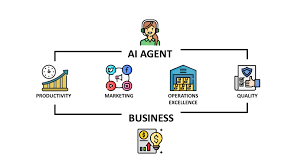
Visual suggestion: Diagram showing AI SaaS impact across Operations, Marketing, HR, and Sales.
How to Choose the Right Top AI SaaS Tools for Businesses
Selecting the right AI SaaS platform is critical. Most adoption failures don’t happen because the technology is weak—but because the tool doesn’t fit the business reality.
Selection Criteria: Integration, Scalability, Security
- Integration: The platform must connect seamlessly with CRMs, analytics tools, and collaboration software
- Scalability: It should support growing data volumes, users, and departments
- Security & Compliance: Enterprise-grade security with GDPR and CCPA compliance is non-negotiable
Productivity and ROI Factors
Before committing, evaluate whether the tool:
- Delivers measurable efficiency gains
- Reduces manual errors or bottlenecks
- Produces quantifiable ROI within the first months
Common mistake to avoid: Choosing the most powerful tool instead of the most adoptable one. In many cases, ease of implementation and user adoption matter more than advanced features.
Quick takeaway: Prioritize platforms that are easy to implement, scalable, secure, and demonstrably productive.
Micro-summary: Focus on ROI, security, and integration first to avoid adoption failure.
Comparison of the Best Top AI SaaS Tools for Businesses
Before reviewing the tools below, it’s worth noting one thing:
These are platforms businesses actively pay for and deploy—not experimental or consumer-grade AI tools.
If you’re evaluating AI SaaS from a budget-owner or decision-maker perspective, the table below highlights where each platform delivers the most value.
| Tool | Pros | Cons | Use Case | Integration | Team Size | Dept Fit | CTA |
|---|---|---|---|---|---|---|---|
| OpenAI Enterprise | Advanced NLP, scalable, strong support | Premium pricing | Customer support & analytics; ticket handling −40% in Q1 | ★★★★★ | Medium–Large | Operations / Support | Start Trial |
| Jasper | Easy content generation, ready templates | Limited integrations | Marketing content; campaign output +30% | ★★★★☆ | Small–Medium | Marketing | Try Free |
| Notion AI | Workflow & notes automation | Limited predictive analytics | Documentation & task management; admin work −20% | ★★★★☆ | Medium | HR / Admin | Explore |
| Salesforce Einstein | Deep CRM integration | Complexity for beginners | Sales forecasting; pipeline accuracy +25% | ★★★★★ | Medium–Large | Sales | Request Demo |
| HubSpot AI | Marketing automation & analytics | Advanced features require premium | Lead generation; conversion rate +15% | ★★★★☆ | Small–Large | Marketing / Sales | Get Started |
<!– AdSense Block 2 – After table high CTR placement –>
Key takeaway: Choose tools that align with your department goals, integrations, and team size to maximize ROI and adoption.
Affiliation links in CTAs recommended for additional monetization.
Use Cases by Business Function
AI SaaS delivers the highest ROI when applied to clear, repeatable workflows with measurable outcomes.
Finance & Operations
Top AI SaaS Tools for Businesses automate invoice processing, anomaly detection, and financial forecasting through clearly defined AI-powered business workflows. For example, OpenAI Enterprise reduced manual reconciliation by 40% in three months, allowing finance teams to focus on strategic analysis instead of manual checks.
Marketing & Sales
Platforms like Top AI SaaS Tools for Businesses such as Jasper and HubSpot AI generate content, personalize campaigns, and improve lead scoring. One marketing team using Jasper increased content output by 30%, accelerating campaign cycles and reducing time-to-market.
HR & People Management
AI-driven platforms streamline recruitment, onboarding, and performance tracking. Notion AI helped HR teams reduce administrative workload by 20%, enabling managers to focus on talent development and retention.
Mini-summary: Across departments, AI SaaS tools save time, increase productivity, and enhance decision-making.
CTA inside mini-cases: Explore full implementation strategies in AI for Business Workflows.
Tips Before Making a Decision
Integrations and Compatibility
Confirm the platform integrates with tools you already rely on, such as Salesforce, Slack, or Microsoft 365.
Free Trials and Demos
Use trial periods to evaluate usability, adoption, and early ROI. Many teams identify value—or friction—within the first 30 days.
Questions to Ask Vendors Before Committing
- How quickly do most teams see ROI?
- What internal resources are required to get started?
- How does the platform scale across departments?
- What security standards are in place for sensitive data?
Quick Evaluation Checklist
- Meets workflow needs ✅
- Scales with business growth ✅
- Enterprise-grade security ✅
- Measurable productivity or ROI ✅
- Supports department-specific use cases ✅
Mini-summary: A structured evaluation process reduces risk and increases the likelihood of successful AI adoption.
Frequently Asked Questions About Top AI SaaS Tools for Businesses
Which AI SaaS tool is best for marketing?
HubSpot AI and Jasper, two of the top AI SaaS tools for businesses, automate lead generation, CRM integration, and content personalization, improving campaign efficiency and shortening time-to-market.
Can these tools integrate with existing systems?
Yes. Most platforms provide APIs and native integrations with enterprise software such as Salesforce, Slack, and Microsoft 365, ensuring smooth workflows and minimal disruption during implementation.
Which tools scale best for mid-to-large businesses?
OpenAI Enterprise, Notion AI, and Salesforce Einstein scale efficiently across departments and data volumes, supporting growing teams while maintaining performance and reliability.
How quickly will an AI tool pay for itself?
Many companies see measurable productivity gains within 3–6 months. For instance, marketing and operations teams using these platforms often report ROI through faster campaigns, reduced errors, and time savings.
What about security and compliance?
Top AI SaaS platforms comply with GDPR and CCPA and offer enterprise-grade encryption, making them safe for handling sensitive company and customer data.
Which departments see the highest ROI using Top AI SaaS Tools for Businesses?
Marketing, Sales, Finance, and Operations typically see the highest ROI. These departments benefit from faster content creation, improved lead scoring, accurate sales forecasting, and streamlined repetitive processes, freeing teams to focus on strategic work.
Conclusion & Next Steps
Choosing the right Top AI SaaS Tools for Businesses can transform operations, boost productivity, and improve decision-making across your organization.
Key criteria recap:
- Integration with existing systems
- Scalability across teams
- Enterprise-grade security
- Measurable productivity gains
Next step: Start a free trial or request a demo to see how the right AI platform can save hours each week and deliver competitive advantage. <!– AdSense Block 3 – Just before CTA final –>
Related Articles
- AI for Business: How Companies Use AI to Scale and Grow
- AI Automation for Business Workflows
- AI Analytics for Business Decision Making